
Honda CB1000 Hornet: Style, Power, and Technology
Turn off the auto-translator
The renewed Honda CB1000 Hornet positions itself as a high-end naked motorcycle, aimed at riders seeking a balance between sporty performance and urban comfort.
Equipped with a 999 cc inline-four engine, dual overhead camshafts (DOHC), and liquid cooling, this model represents an evolution in the streetfighter segment, combining advanced technology with an aggressive design.
The CB1000 Hornet is available in two versions, differentiated by performance and equipment. The standard version delivers a maximum output of 111.6 kW (151.7 horsepower) at 11,000 revolutions per minute, with a torque of 104 Nm at 9,000 rpm. Its curb weight of 211 kilograms ensures balanced handling without sacrificing agility.
The SP variant raises the specifications, reaching 115.6 kW (157 horsepower) and 107 Nm of torque, with a weight of 212 kg. This higher-tier version incorporates a series of technical and electronic enhancements designed to optimize performance, such as a factory quickshifter for faster and smoother gear changes, an Öhlins TTX36 Pro-Link rear shock with automatic adjustments, and an exhaust valve that activates at 6,000 rpm, allowing the engine to breathe more freely. It also offers shorter gear ratios in the lower gears, favoring city riding.
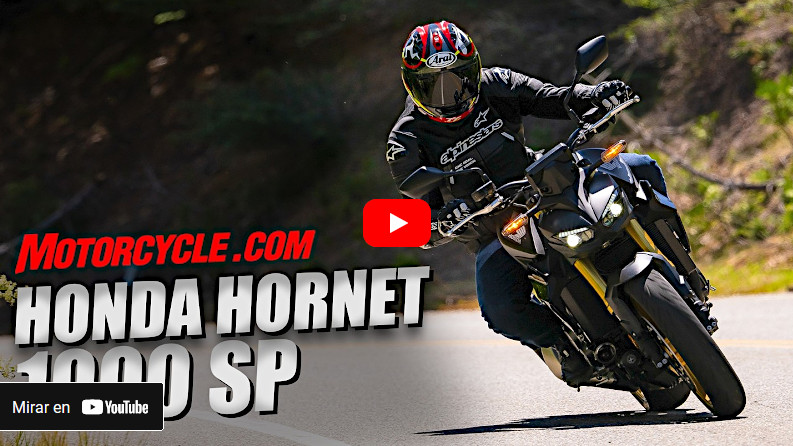
Technical Performance and Comfort-Oriented Design
Both versions share architecture derived from the 2017 CBR1000RR Fireblade engine, tuned for friendlier use in urban settings and daily commutes. The result is a progressive power delivery—smooth, yet forceful when required.
The electronic throttle, known as Throttle by Wire, includes five riding modes: Standard, Rain, Sport, and two customizable settings. These allow the rider to tailor engine response and traction control according to personal preference and road conditions.
The steel twin-beam frame offers both rigidity and flexibility, striking an ideal balance between stability and maneuverability. Additional features include an 809 mm seat height, a 17-liter fuel tank, and a high-grade braking system with Brembo Stylema four-piston calipers and 310 mm front discs.
Aesthetically, the CB1000 Hornet adopts an aggressive silhouette, with sharp lines and twin LED headlights reinforcing its street identity. The finishes and detailing highlight its sporty focus without neglecting rider comfort.
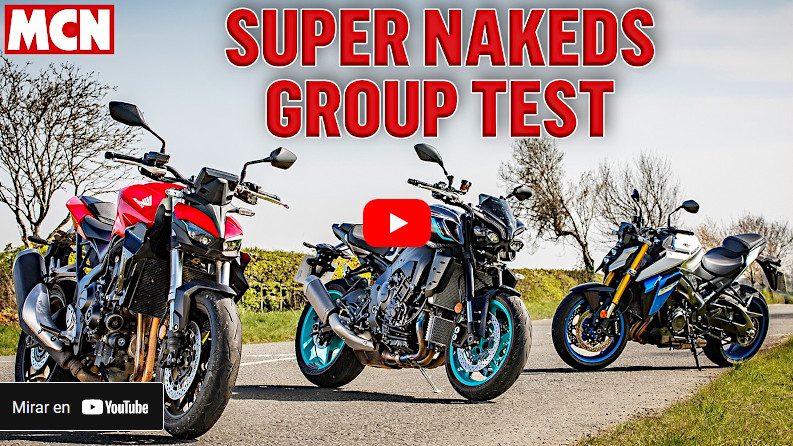
Cutting-Edge Connectivity
One of the model's most notable features is the inclusion of the Honda RoadSync system, an advanced connectivity platform that allows the rider to link a smartphone (Android or iOS) via Bluetooth. Through a 5-inch color TFT display, functions such as turn-by-turn navigation, call management, voice-based messaging, music playback, and handlebar-mounted controls—thanks to backlit buttons—are accessible.
Additionally, the Smart Voice Control function enables voice commands from the helmet, allowing the rider to remain focused on the road. This system, available on both the standard and SP versions, represents an effective integration of technology and safety.
Key Differences in the SP Version
The SP variant increases both power and torque, as well as incorporating higher-grade components in suspension, design, and mechanical response. The inclusion of Öhlins elements, the quickshifter, and more refined electronic adjustments position this version as the ideal choice for those seeking a more precise and sporty riding experience.
In terms of design, the SP stands out with exclusive details and a more refined finish, aligned with a premium aesthetic. It also shares technologies with the base version, such as the electronic throttle, advanced connectivity, and digital display.
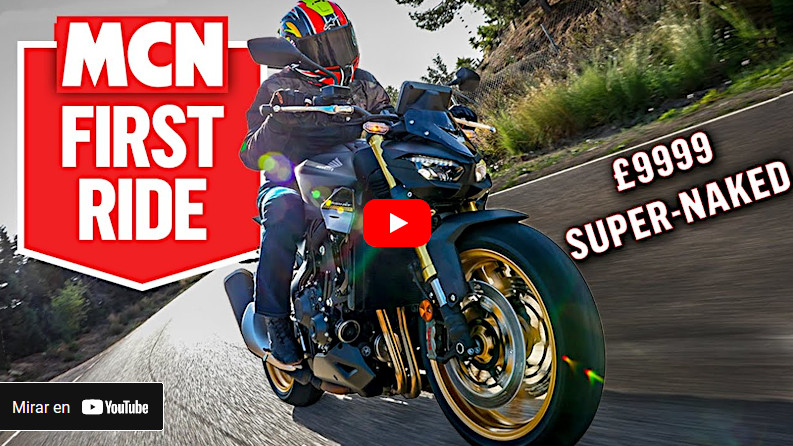
Columnist's Opinion

The Honda CB1000 Hornet stands out for its power, technology, and aggressive styling. The SP version adds premium components, offering an ideal option for motorcyclists seeking both performance and style.